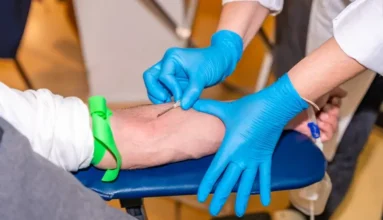
IV fluid administration
Appendicitis at Sea: An Emergency Situation and the Role of Maritime Medics
Introduction
Appendicitis is a common and urgent medical problem. However, managing it at sea, far from specialized care, is very challenging. Without timely treatment, it can lead to serious complications, such as a burst appendix or widespread infection. Therefore, well-trained Maritime Medics are essential for recognizing and managing this condition until proper medical care is available. As a result, their training can make the difference between a stable patient and a life-threatening emergency.

Statistical Data on Appendicitis Onboard Ships
The risk of appendicitis on ships is well-documented. For example:
- The U.S. Navy recorded 4.3 to 9.9 cases per 1,000,000 person-days from 1963 to 1993 (Wilken et al.).
- In 2002, 18% of medical evacuations from Atlantic Fleet submarines were due to suspected appendicitis (Dr. Bruce Cohen, personal communication).
- Up to 15% of cases treated without surgery still resulted in ship delays or onboard surgeries.
These statistics highlight how common and disruptive appendicitis can be in maritime settings. Moreover, they underline the importance of proactive management to avoid complications.
Managing Appendicitis Onboard
When a hospital is not nearby, appendicitis is often managed with a conservative approach. This includes:
- Antibiotics: To fight infection and control inflammation.
- Pain Relief: To help the patient stay comfortable.
- Observation: Monitoring for warning signs of worsening, such as high fever or severe pain.
This approach helps stabilize the patient until they can receive full medical care, whether at a hospital or through evacuation. Although this method is effective in most cases, complications can still arise. Consequently, Maritime Medics must remain vigilant and adaptable to changing situations.

On Ships Far from Hospitals
Ships traveling across oceans or operating in remote areas face unique challenges. In such situations, the decision to divert the ship or arrange an evacuation depends on the patient’s condition and advice from shore-based doctors. For instance:
Soviet fleet data shows that 84.1% of appendicitis cases were successfully treated without surgery (Gurin, 1995).
These statistics show that, with proper care, many cases can be handled onboard. As a result, unnecessary disruptions to the ship’s schedule can be avoided.
The Role of Maritime Medics
Maritime Medics are essential for handling emergencies like appendicitis at sea. Their training includes:
- Recognizing Symptoms: Knowing the signs of appendicitis, such as pain that moves to the lower right side of the abdomen, nausea, and fever.
- Using Medical Tools: Operating ultrasound devices and administering intravenous medications safely.
- Telemedicine Skills: Communicating clearly with shore-based doctors to get advice and follow treatment plans.
With these skills, Maritime Medics can provide quick, effective care. Furthermore, this not only helps the patient but also minimizes costly delays for the shipping company.
Impact on Ship Operations
Emergencies like appendicitis can have serious financial consequences. For instance:
- 10–20% of cases require ships to divert to a port, leading to delays and extra costs.
- Delays can disrupt schedules, affecting the shipment of goods and company reputation.
- A worsening condition could result in higher medical expenses and legal risks.
Proper onboard care reduces these risks and ensures smoother operations for the vessel. Thus, investing in effective training programs for Maritime Medics can be both cost-effective and life-saving.
Conclusion
Appendicitis at sea is a serious challenge, but it can be managed effectively with the right training and protocols. Maritime Medics play a key role in stabilizing patients, ensuring timely treatment, and supporting the crew. Their skills not only save lives but also prevent costly delays for the shipping company. By investing in the training of Maritime Medics, companies can better protect their crews and their operations. Ultimately, this leads to safer and more efficient voyages.
References
- Campbell et al., “Appendicitis in Remote Medical Care Systems,” Journal of the American College of Surgeons (2004).
- Wilken et al., “Submarine Medical Statistics, U.S. Navy.”
- Gurin, “Appendicitis Cases in the Soviet Fleet,” 1995.
Frequenlty Asked Questions
-
Τι προληπτικά μέτρα μπορούν να ληφθούν για την αποφυγή σκωληκοειδίτιδας εν πλω;
- Η διατήρηση ισορροπημένης διατροφής, η αποφυγή υπερβολικής κατανάλωσης τροφών που μπορεί να οδηγήσουν σε φλεγμονές, και η τακτική φυσική δραστηριότητα μπορούν να μειώσουν τον κίνδυνο εμφάνισης σκωληκοειδίτιδας κατά τη διάρκεια του ταξιδιού.
-
Ποιος είναι ο ρόλος της τηλεϊατρικής στην αντιμετώπιση της σκωληκοειδίτιδας στη θάλασσα;
- Η τηλεϊατρική επιτρέπει στους ναυτικούς ιατρούς να συμβουλεύονται εξειδικευμένους γιατρούς στη στεριά για τη διάγνωση και τη διαχείριση σκωληκοειδίτιδας, προσφέροντας γρήγορη και αποτελεσματική υποστήριξη, ακόμη και σε απομακρυσμένα πλοία.
-
Ποια είναι τα πιθανά εμπόδια για την αποτελεσματική διαχείριση μιας περίπτωσης σκωληκοειδίτιδας εν πλω;
- Τα κύρια εμπόδια περιλαμβάνουν την έλλειψη εξειδικευμένων ιατρικών εργαλείων, τις δύσκολες καιρικές συνθήκες που μπορεί να εμποδίζουν τη μεταφορά του ασθενούς, καθώς και τη δυσκολία επικοινωνίας με τις ιατρικές ομάδες στη στεριά.