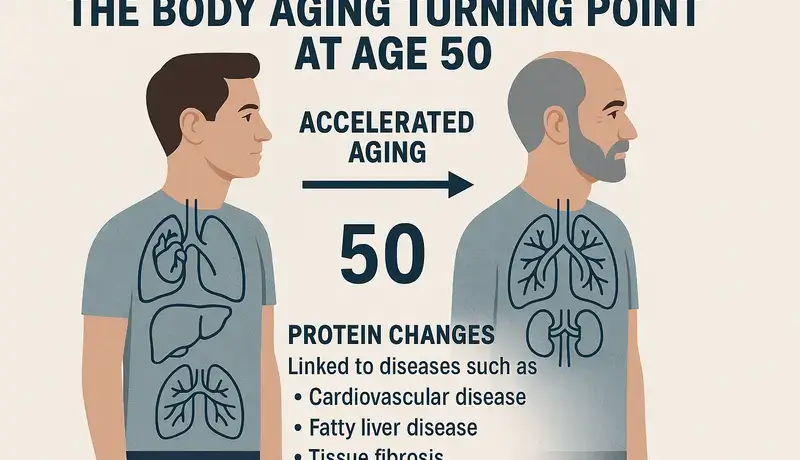
Study Reveals Turning Point When the Body Ages Faster
Aging is a natural process, but research shows it does not always progress at the same pace. Instead, life stages bring rapid changes that accelerate aging.
Aging Doesn’t Happen at the Same Speed
Past studies suggested that rapid aging phases occur around the ages of 44 and 60. However, new research published in Cell identifies another critical window: many organs and tissues begin to age faster around the age of 50.
Creating an “Atlas of Aging”
Scientists analyzed 516 tissue samples from 76 organ donors aged 14 to 68. These included cardiovascular, digestive, respiratory, immune, musculoskeletal, skin, and blood samples.
By studying proteins, researchers built a proteomic aging atlas that shows how more than 20,000 proteins — the building blocks of cells — change throughout life. As a result, this atlas provides a clear picture of how aging unfolds across multiple organs.
The Age 50 Turning Point
Between the ages of 45 and 55, the body enters a major transition period. Researchers describe this stage as a “molecular cascade storm”, when multiple organs experience explosive changes in protein expression.
- The aorta undergoes the most dramatic changes.
- Blood proteins mirror these shifts, confirming the systemic nature of aging.
- Aging-related proteins act as messengers, spreading signals throughout the body.
Proteins Linked to Disease
The study shows that 48 proteins connected with disease increase with age. These changes lead to conditions such as:
- Cardiovascular disease
- Fatty liver disease
- Tissue fibrosis
- Liver tumors
Therefore, researchers conclude that organ aging drives chronic diseases. Each illness reflects a different outcome of the same biological process.
Expert Insights
Dr. Cheng-Han Chen, cardiologist, notes that understanding protein changes helps doctors design therapies to slow aging-related diseases. In addition, it provides targets for earlier prevention strategies.
Dr. Manisha Parulekar, geriatric specialist, explains that protein misfolding affects not only the brain but also many tissues. Furthermore, she emphasizes the need to shift medicine from a disease-focused model to a health-focused one.
Looking Ahead
The findings highlight age 50 as a critical biological inflection point. Future longitudinal studies should track how genetics and lifestyle shape this process. Moreover, these studies will confirm whether the age 50 window applies universally.
Ultimately, the goal is not only to extend lifespan but also to help people enjoy healthier and more vibrant years as they grow older.
Frequently Asked Questions (FAQ)
At what age does the body age faster?
Studies show the body experiences a major turning point between ages 45 and 55. Most organs accelerate aging most noticeably around age 50.
What is the body aging turning point?
It is the stage in life when proteins in organs and tissues undergo rapid changes. As a result, the risk of age-related diseases increases significantly.
Which diseases are linked to accelerated aging?
Researchers found that proteins linked to cardiovascular disease, fatty liver disease, tissue fibrosis, and liver tumors rise with age.
Can we stop the aging process?
No, people cannot stop aging. However, healthy lifestyle choices and medical advances can slow its progression and lower disease risks.
Why is age 50 considered a critical point?
Researchers discovered that around age 50, organs experience a “molecular cascade storm.” Consequently, this period marks a key transition in human aging.
Body Aging Turning Point