Can Fiber Help with Weight Loss?
When trying to lose weight, most people focus on tracking proteins, fats, and carbohydrates. However, fiber is a powerful nutrient that often gets overlooked. Beyond aiding digestion, fiber can also support healthy weight loss and improve overall well-being.
Why Is Fiber Important?
Fiber is a type of carbohydrate the body cannot fully digest. Instead, it passes through the digestive system, supporting gut health and regular bowel movements. It also contributes to:
- Lower LDL (“bad”) cholesterol
- Improved blood pressure
- Reduced heart disease risk
- Enhanced insulin sensitivity
- Increased satiety and appetite control
How Much Fiber Do You Need?
Most people fall short of their daily fiber needs. The recommended intake is:
- Men: up to 34 grams per day
- Women: around 28 grams per day
Unfortunately, less than 5% of people meet these daily targets.
Top Fiber-Rich Foods
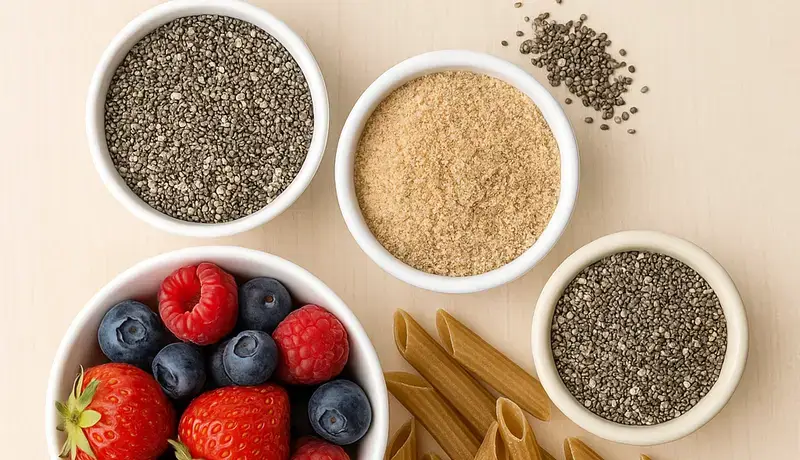
Increasing fiber in your diet doesn’t have to be difficult. Start with these three easy and effective options:
- Frozen berries: Affordable, long-lasting, and great for smoothies, oatmeal, or yogurt.
- Whole wheat pasta: Higher in fiber than white pasta and great as a base for balanced meals.
- Chia seeds: Small but nutrient-dense, with fiber, omega-3s, and protein. Perfect for oatmeal, yogurt, or pudding.
What About Fiber Supplements?
Supplements like psyllium husk can help boost fiber intake, especially if you’re not getting enough from food. However, whole foods provide extra nutrients and antioxidants that supplements lack. Use fiber supplements as a complement—not a replacement—to a balanced diet.
Conclusion
Fiber is essential not just for digestion, but also for long-term weight management, heart health, and insulin function. Simple changes—like switching to whole grains or adding fruits and seeds to your meals—can make a significant difference.
If you want personalized guidance, book a consultation with our team at HOMED. We’re here to help you reach your health goals.